Search This Blog

Monday, November 19, 2018

Can You Keep a Secret? A Review of Karen M McManus’s Two Can Keep a Secret


Wowzers. What a book.

I want to start out by saying that I had my fingers super tightly crossed in hopes that I’d receive an ARC of Two Can Keep a Secret: I loved One of Us is Lying, so the idea of not having to wait to read Karen M. McManus’s next book was very exciting. When I got approved, I couldn’t wait to read this text, and I am so, so glad I got the chance. So thank you Net Galley for this thrilling ARC!


There is a lot going on in this book: absent parents, overall family disfunction, being the new kids, a teacher mysteriously killed in the opening.... a lot going on. At first, you kind of feel like it might be too much: how is this reasonably short YA book going to tackle all these themes and plot threads in this text? Well, it does. It’s a deeply satisfying book with a (sighhhhhhhh of delight) deeply satisfying ending. And I’m so glad because satisfying endings have really been missing from my life lately. 

Okay, so basically this is the book: Ellery and Ezra, fraternal twins, are sent to live with their grandma in their mom’s home town after their mom is sent to court ordered rehab; the night they arrive in their new town, they happen upon the town’s most popular teacher, killed by a hit and run. 

I will say the hit and run plot line is my least favorite because, while it is tied up eventually, it’s abandoned very early and not really mentioned. While I do get that this is addressed by the characters in the book and they discuss why it’s abandoned, it’s still lacks believability to me. Even after threatening messages show up throughout the town, I think a small town would still mourn/discuss/investigate the loss of a beloved teacher.

Don’t let that dissuade you from reading, though, because I think most things work. Ellery and Malcolm, a local teen, share the job of telling the story and both characters are likeable and have easy voices to read (even if Ellery does have that one annoying trait). My only complaint there is that, of the two twins, Ezra was much more interesting to me and I would have almost rather it be told from his perspective than Ellery’s, but I still think it was the right choice from a literary standpoint. Because of Ellery’s personality, her voice telling the story brings everything much more full circle.

Let me tell you about the ending without spoilers. Okay, I know I’ve touched on it already, but let me ask: any Gilmore Girls fans in the house? Remember all the build up over those “last four words?” And how disappointing they were? This book ends on a reveal and it’s not disappointing at all. It isn’t five words and they feels great to read. So read it!!

5/5

Saturday, November 10, 2018


First and foremost, a huge thanks to Netgalley for the ARC of this breathtaking novel.

Warning: this book is not for the faint of heart. As a mom, certain parts of this book broke my heart and took me to dark places I really didn’t want to think about. I cried while my husband grabbed my Starbucks. I cried on the way back from Target. It really got inside my heart and made me feel more than I wanted to feel.

The premise of the book was such that I knew there’d be very little chance of mediocrity with this book: it would either be insightful and lovely or stupid and ridiculous. Luckily, I found it more the former than the latter.

There were things I didn’t like: I thought Astrid’s boyfriend was a bit terrible, going back and forth between controlling and selfish. Actually, you know what? That’s the only thing.

One thing I don’t tend to focus on tons that really stood out to me on Kate McGovern’s Fear of Missing Out was pacing. I liked the way things built in intensity and then slowed down as we waited at the end. I liked how McGovern wasn’t scared to steer the text away from our expectations as she reached the end. I miss won’t go into that more because there’s no way to really explore what I’m saying without giving spoilers and it’s not exactly what you’d call a plot twist, but things definitely don’t end the way you expect they will. The book, to some extent, reads in a way that has you believing there are two possibilities for the ending and the actual ending was a third option.

None of this would work without Astrid. I really liked Astrid and I don’t mean liked her as in thought she was cool  and would like to be friends with her. I mean she was a really great character. Her voice felt so authentic; she had the snark of a witty, bright girl, but without that unrealistic precocious tone that some writers give their teens. The perfect mix of bright, but also deliciously imperfect. Stubborn and impetuous, she’s the perfect girl for what feels more like a Bildungsroman than just another YA cancer story.

This is a beautiful read that will stay with me for a long while. Read it.

Tuesday, October 30, 2018

You Know You Want to Read This—Kristen Roupenian’s You Know You Want This

Thank you To Net Galley for the ARC of this fierce short story collection I was given in exchange for a fair and honest review.

The thing about short story collections—and I’m pretty sure I’ve said this before—is that the experience of reading one is similar to buying a new cd was in the 90s. There was at least one track you knew that had compelled you to buy the album (in this case “Cat Person” is the story equivalent of that track. After you experienced the whole, you’d find some tracks that were amazing, som that were okay, and usually several that you could skip forever. Kristen Roupenian’s You Know You Want  This  is no exception. Some stories—“Biter,” for example, really stood out as impressive, while others, like the much acclaimed “Cat Person,” actually, were less stellar.

Let’s talk about “Cat Person.” It’s basically out a college girl who dates a guy that she doesn’t really like, then does kind of like, then doesn’t like again. She is incredibly dishonest about her feelings and has horribly ugly thoughts about his age, body, etcetera and then, after he does nothing wrong and treats her pretty well, she ghosts him. Then, in the end, he is turned into a “nice guy syndrome” type who lashed out when he’s rejected. Let me say this: huge feminist over here, so I’m not trying to justify his abusive, slut shaming texts at the end of the story (at this point I’m not protecting against spoilers as this story was totally viral last year), but she is pretty awful to him. She just disappears when he hasn’t done anything wrong instead of talking to him about her feelings. It’s hard to root for this shallow girl. At the same time, you can’t conpletely rule out “Cat Person”  because even though the tone towards overweight people is pretty gross, the voice is authentic and the interaction at the end—a guy online suddenly lashing out after facing rejection—is incredibly relatable.

It’s kind of a shame because Roupenian handles the idea of the “nice guy” beautifully in other stories: “The Good Guy,” which tells the story of a classic nice guy who demeans women horribly while convinced he’s actually the ideal kind of guy, reads as so authentic it was almost painful. As a reader, watching Ted become more and more mysoginistic while still protesting that he was a decent, authentic man provided a lot of insight into the dangers of our toxically masculine culture. Poor Ted.

“Biter,” too, stood out as a really great story. It was the shortest in the collection, but despite its short length, it really packed a punched. The story of mild mannered and forgettable Ellie, “Biter” was a perfect display of the way people crave. I’m not going to lie, I was really rooting for her to give in to her desires far before she did.

All in all, this was a really great collection. Again, there were a few weak stories—I didn’t like “The Night Runner” at all—but I received my copy last night and have already finished it. The fact that I couldn’t stop feasting, binging, gorging on these stories says all that needs to be said.

3.5-4/5: Read This.


Sunday, October 28, 2018

You Owe Me a Better Ending: My Review if You Owe Me a Murder by Eileen Cook

First, thank you Net Galley for the ARC of this book I was given in exchange for a fair and honest review.

So, it finally happened. I’ve started missing the protagonist you’re meant to hate trend. That’s largely because hating a protagonist is much better than having no feelings at all, especially when the reason is that the character is incredibly blah. It’s not that Kim, our main character, was stupid (she was) or hopelessly clingy (she was that, too); the problem with her character was that she simply wasn’t interesting. It wasn’t compelling to be inside her head; she wasted so much time being mopey over a boy she’d just met (right after the last guy she was hung up on had been murdered in front of her). And can I just say, I even kind of get that; I was boy crazy at her age. It’s just such a leap that she goes from being so hung up on Connor to being so Gaga over Alex that she can’t stop moping around even while trying to solve her problem.

Nicki is far more interesting, but even she is kind of cheated on the end. I won’t give a real spoiler because what’s the point in reading a review if you aren’t going to read the book, but I’m not really sure about how they reduce her whole story to a girl being salty over a guy. It’s a little insulting that the book boils down to two supposedly smart women being completely willing to implode their whole lies because what? They were scorned in love? Nope, not a fan.

I did like Alex, though. Yes, I get the slight irony of me being angry at these two characters for letting a boy be the center of their world when a boy was my favorite part of the book, but I can’t help it. He was so sweet and endearing....although his character, too, was flawed. There was all this commentary about him being a needy homeschooled boy and being so awkward, but he was actually a pretty smooth operator. He wooed Kim straight out the gate and always knew exactly what to say. It felt very much like that thing where people pretend to be geeks because geek is chic now and I’m not really here for it.

It kind of bums me out how easy the ending was because I think the concept was really cool. The idea that human beings can be capable of so much more ugliness than we give them credit for was one that could have been so much more flushed out if the characters were more compelling. They just didn’t Have the psychological depth for this storyline.


3/5 stars. Not a hard pass, but you could miss it.

Friday, October 26, 2018

ICYMI: Edward 2.0: My review of Jenny Han's To all the Boys I've Loved Before

I am so mad I used my Audible credit on this book.

Like  a lot of people are doing right now (according to Goodreads this is one of the most read books this week), I decided to read To all the Boys I've Loved Before after seeing the adorable, still recommended Netflix version of the film. After all, we all know the rule: if the movie is good, the book has to be better, right?

Not in this case.

First, the love story falls flat because the characters have little to know chemistry. Peter K. is dull, oafish, and frankly, pretty damn problematic. In fact, while reading this book and some of his expectations for Lara Jean, I was constantly reminded of Edward Cullen from Twilight and I wanted to scream: being controlled and bossed around my some douche hat is not romantic!

Let's start with the plot line because you will need to know it to get my rage: Lara Jean Covey is an intensely shy, naive high school Junior who quietly pines over boys by writing them love letters. One day, her younger sister gets mad and sends them all out, which leads to chaos. One of the "boys she loved" is her sister's ex-boyfriend and her neighbor, Josh. In order to distract him from the letter, she enters a fake dating plot with another letter recipient, the recently dumped-by-Genevieve: Peter K.

You needed to know all this because once the inevitable attraction sparks between Lara Jean and Peter K., Peter is constantly jealous and controlling of Lara Jean's relationship with Josh, even though the whole thing she was supposed to get out of the relationship with Peter was the ability to be friends with Josh (she wanted things to go back to normal after the weirdness). Meanwhile, when Lara Jean expresses her discomfort at his relationship with Genevieve (who he actively loves and admits to loving), she's basically told to suck it up. don't get me wrong, I think Peter's reaction is healthy: people should be able to continue friendships after breakups and partners should trust those friendships. What isn't cool is the double standard: Peter expects Lara Jean to avoid even the appearance of a close friendship to Josh, but tells her that Gen will "always be in {his} life."

Peter K. is also incredibly controlling of Lara Jean, mocking her taste, telling her how to wear her hair, not allowing her to skip events she doesn't want to go to. He doesn't care about her comfort and bullies her into doing things under the guise of trying new things, but when she wants to do something actually healthy, like drive, he is pretty quick to be put out because of how it will affect their arrangement. Lara Jean notes this when she is afraid to go on the ski trip with him because he "has a way of talking [her] into things [she] doesn't want to do." that's a pretty common theme: Lara Jean wasn't just chosen for their scheme because everything fell into place that way: Peter seems to really enjoy having a shy, [passive girl that he can manipulate into giving him his way.It's honestly pretty predatory.

the rest of my complaints are far less serious than the toxic nature of their relationship: Peter is boring, Margot is a stuck up hypocrite, the book is super sex-negative . . .

As a progressive chick in 2018, this book was just not my thing. Maybe it will be yours. If you like bland romantic comedies, this one's probably for you.

Wednesday, October 24, 2018

Folklore and Neuroticism: a Review of Little Darlings by Melanie Golding


Thank you to Net Galley for the ARC I was given of this thrilling book in exchange for my fair and honest review.

First, let me say that I’m a huge freaking fan of Lore. I’m not saying that guaranteed I would like this book or anything, but it definitely help because the little blurb was misleading. This book wasn’t inspired by fairy tales, it was inspired by folklore and if you’re anything like me, you want to draw little hearts on either side of that word. It helps, too, that the use of folklore was done in a really aesthetically pleasing way; not only was the book directly inspired by twin lore and lore about changelings, each chapter was marked with an epigraph from a fairy tale or folktale that marked the theme of the upcoming chapter. These were very well selected and just lovely.

The other thing you should probably know up front is that I suffered from some postpartum mental health issues, so this book had me on edge for about 90% of my reading. The way Lauren knew how illogical she sounded, even as she tried to convince those around her that she was perfectly sound, felt so authentic! Essentially, those two themes are what the book boiled down to: is folklore real (or at least, certain stories) or is the mother in the story suffering from postpartum psychosis after giving birth to twin boys? Reading as the answer began to (somewhat) emerge was intense because it constantly felt like there was a lot at stake, not just for our protagonist, but for the majority of the major characters of the book. The fact that so much is left up to the readers interpretation worked for me, too, because it really added to the feel that the book, despite its supernatural elements, was somehow very realistic.

The character development was pretty on point, too. You never quite knew how you felt about any specific character and sometimes you could like someone and hate them within a handful of pages. One thing never changed for me: I really disliked the protagonist. I'm okay with that: I don't need to like her. Lauren, to me, was hard to root for in many places because of her superficial, sniping inner monologue. She was constantly calling minor characters ugly or putting down their hygiene; it didn't detract too much from the overall readability of the book, but it did make me cringe  a little each time. If I actually have any readers who read my blog on a semi-regular basis, you know this has been a recurring theme for me lately, but it’s not my fault. They make the protagonist pretty horrible in the vast majority of books and movies. Lauren, wasn’t as bad as some, she was just shallow. I'm going to put shallow in the meh category when comparing it to what else is out there in terms of horrible characters lately.

When looking for an image to attach to this blog post, one had a blurb across the cover: Most unsettling book of the year! You know what? that's pretty accurate. This book was unsettling because there was such a feeling of ambivalence. I can't go into that without revealing more than I want to give away, but the thing that makes this book work is right up until the end, you just aren't sure what the right choice is for our girl Lauren. This is truly a must read.

Sunday, October 14, 2018

A Twist You Can't Miss: Review of Kate A.Boorman's What We Buried


Thanks to Net Galley for the ARC I was given in exchange for my honest review! This book was a real pleasure to read. 

What We Buried by Kate A. Boorman started off promising: the premise was that the parents of a surly young man and vapid young beauty pageant contestant vanish right before the judgement comes in on the case Liv (beauty queen) filed against them. What follows is the harrowing journey the two siblings must share to find their parents and the discovery of something far more valuable.

I'm going yo do this  a little backwards and start with the ending (no spoilers, don't worry). I promise neither of the two things I am about to say are humble brags, they're just true: I read a lot and endings almost never surprise me anymore. Seriously, I don't even remember the last time I didn't see an ending coming . . . until 11pm last night when I finished this book. The ending was a total surprise to me because, even though I had the thought a few times that I knew where it was going, Boorman totally lured we away with faux breadcrumbs so that I was on a different trail. I just don't want to undersell how much I appreciated that: there was surprise at the end of a novel! That being said, I do have a gripe about the ending: the pacing is not great. Throughout the book I felt the pacing was expertly handled: the story never lagged, but it never felt rushed. Then we have the ending and yeah, it needed to slow down. At certain points, I was really confused and listen--I'm a careful reader. I don't race through and skim. I had to reread the last ten pages immediately after I finished because I wasn't sure what was actually happening.

I want to talk a little about Jory and Liv now. They are siblings that both harbor some resentment, although Jory's is more for Liv and their dad while Liv's resentment is more aimed at their mother. It's a smart book in terms of the way the resentment is addressed: the reasons why each feels hurt are complex enough that you never completely despise either sibling, but you do occasionally want to shake both of them. The parents, though, are horribly superficial people who undermine both children's sense of worth: because Jory has Moebius  Syndrome, he is treated like he has little valuable while Liv is treated like her only worth is totally conditional upon her ability to win. "Beauty is her talent," as she is told by her awful, awful mother.

Speaking of the awful, awful mother, I didn't feel that the parents were as developed as they could be. I'm not saying I need a sobbing backstory that justifies their cruelty, but something deeper than what we are shown would have been nice. Right now, both parents are pretty much caricatures: pageant mom caricature and alcoholic dad caricature. They could really just be cardboard cutouts of people and some sense that they were ever, even for a day, happy would have gone really far in making the story a bit more complicated. Still, the real story is Jory and Liv, Liv and Jory, and they are handled well.

This book really flew by. Last night as I was finishing it, there were several times when I thought I should probably put it down and read more today, but I just couldn't I had to finish. And look, I have three kids, so I value sleep: that tells you what you need to know. This isn't a perfect book, but I would definitely call it a must read. 

Thursday, October 11, 2018

Review of Text me when you Get Home by Kayleen Schaefer


Thank you to Net Galley for the ARC of this book given in exchange for a fair and honest review!

After reading Kayleen Schaefer's Text Me When You Get Home, I really rethought my own relationship to other women.  While I am more of  Schaefer's generation, I found that I'm really more like her mom; as a mother of three kiddos, I don't have as much time to really invest in my personal friendships and the one I do invest it tend to be the ones with easy connections: kids the same age, work together so that there are obvious time we can talk, etc. If it becomes too hard to maintain the friendship or it takes to much time from my household, I'm not that interested.

Schaefer's book is a mixture of friendship memoir and sociological commentary. It looks at the way female friendships have evolved over time and the way media has reflected that change--or, in many cases, not reflected that change. It's true still that television loves a catfight between girls. I grew up in the height of celebreality and my entertaining moments were definitely comprised of the LC/Kristen Cavallari conflicts and the New York/Pumpkin spat. NewYork, in particular, made such a career of her fighting with other women that she's still immortalized in memes almost (or more than?) a decade later. It seems like women were always being pitted against each other for fun or, most commonly, for the love and affection of a guy.

Despite the media representation, it seems like women's friendships stay pretty powerful things; I see it played out over and over on my social media timelines where women share affection and praise each other for what they bring to their friendships. They welcome each other's babies to the world and share in each other's biggest moments, get each other through the hard parts, and have fun together. Yet Shaefer makes an excellent point: their relationships to each other are not prioritized or given the same respect as familial/marital relationships. Why not? Why are women being put in positions where they have to justify who is meaningful in their lives?

This book was a great overview of female friendship and very enlightening to read. I learned a lot from it and have really decided to spend more time nurturing my relationships with other women. I'm also buying my own BFF her own copy for Galentine's Day this very year.

3.5/5


Monday, October 8, 2018

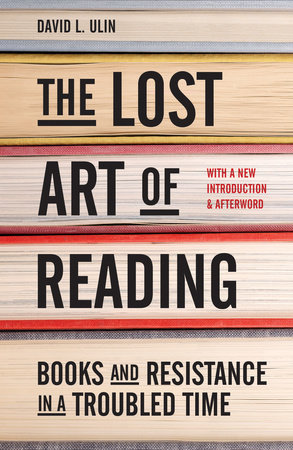
Gatekeeping and the Academic Dillema: A review of David L. Ulin's The Lost Art of Reading


David L. Ulin's The Lost Art of Reading was the type of non-fiction text I typically really enjoy: it makes a case for something (reading) and then uses a blend of anecdote and data to make the case. I think Ulin, for the most part, makes the case well: his own narrative of a lifetime love of reading is infectious. He breaks stories down into more than just things you sit with for an hour or two, but things that influence the way you interpret your life. In particular, I love the way he describes seeing different places he's traveled through the lens of different texts he's read. As someone who never goes anywhere without a book and who is just as likely to categorize people based on literary characters as Sex and the City characters, I could relate to his feelings pretty strongly.

That same strength, though, also works as the biggest flaw in his writing: he's preaching to the converted. For most people who weren't readers, the messages about reading changing the way you see the world wouldn't land, and the scenes from literature--especially the more obscure literature--would intimidate, confuse, and (frankly) bore a beginning reader. I'm not saying that it's Ulin's job to recruit new readers or initiate them into a bibliophile club or the like. Not at all. Still, one would think that if he wanted to write a book explaining the benefits of being a reader, he would want to reach out to non-readers rather than preach to a room of folks that agree with him. It's a bit self-indulgent and this book just isn't very accessible to those who aren't academics. . . and isn't it possible that that very issue has contributed to the decline in reading? All the gatekeeping has made it feel like reading is for the Niles and Frasiers of the world, not the Martins. Doing something to dispel that would have been a good move here.

I have to say, though, I still found this book to be a really worthwhile read and even though I think it will be very challenging for my students, I plan to use it in my comp class next Spring. There are many lines of conversations that are worth exploring through discussion and writing, and I look forward to seeing what my students will make of it. Maybe they'll prove me wrong and I'll find it is capable of converting non-readers after all.

Thank you to Net Galley for the ARC I was given in exchange for a fair and honest review.

Thursday, October 4, 2018

Review of My Favorite book of the year: Karen Thompson Walker's The Dreamers


A big thank you to NetGalley for the ARC I was given in exchange for a fair and honest review!
The Dreamers by Karen Thompson Walker is one of the most beautifully written books I’ve read in 2018. Centering on several different people who are experiencing different levels of interaction with a new virus that causes the infected to sleep without waking, this book was full of potential before I even cracked the spine. After all, it tackles a combination of things that most humans don’t completely understand, epidemics and sleep, both of which are fraught with anxiety. It then takes those seeds of anxiety and spins them to really delve into our psyches: what if I fall asleep and don’t wake up? Could I succumb to an illness even while relatively healthy? What dangers are lurking that I haven’t even accounted for?
While there were many characters who were central in this text—primarily the sleeping Rebecca and her unborn child, Henry and Nathaniel, Libby and Sara, Mei and Matthew, and Annie, Ben, and Grace, the stories of Libby and Sara and Mei and Matthew were the storylines that most spoke to me. It wasn’t that the others were bad—they definitely weren’t and contained some truly beautiful passages about time and love—it’s just that the two pairs I most enjoyed were the two pairs who most encompassed the double meaning of the name of the book. On the surface, the title refers to the rapid eye movement that the sleepers display when they have the illness and the heightened vividness of their dreams. I think, though, those that are awake are all the more dreamers as they demonstrate the way, even during times of crisis, people are servants to their dreams and desires. Mei and Matthew both dream of being more than they were born to be, of finding a deeper sense of meaning and purpose, and, in addition to all the things adolescent girls may typically dream of, Libby and Sara dream of a family life that they’ve never had. 
As I continued reading The Dreamers, I was really impressed by the way Walker took what is kind of a played out questions--how do we know what's real and what's a dream--and put an authentic, human spin on it by showing her audience how little it matters which is which. Reality, after all, is just what we perceive as real in any given moment and sometimes, maybe even many times, "dream" can end up being much more real than our realities.
5/5: This is an absolute must read.

Tuesday, October 2, 2018

Guest Blogger: Teen Daughter Reviews The Disappearance of Sloane Sullivan!


First, thanks so much to Net Galley for the ARC provided in exchange for a fair and honest review. 

The Disappearance of Sloane Sullivan by Gia Cribbs is a book that I believe will become an instant bestseller. It follows an 18 year old girl named Sloane (or one of the nineteen aliases she uses) who is in The Witness Protection Program. The book hops from plot twist to plot twist as she meets people from her past, deals with drama, and starts to recall memories that have led her to her life in hiding. She also has to deal with breaking the rules for the first time in her six years of hiding as a result of her attempts to leave the program. This book would be loved by any fiction fan as it's really a blend of multiple genres.In all, I think Sloane Sullivan is an impressive work of fiction.

In our current horror obsessed society, a book like this is refreshing.A book that stays true to the genre of true crime, while not maintaining the "true" part, is rare and it's this new play on the mystery genre that keeps it fresh. It's not exactly like any other books I've read, but if I were to pin it down, elements make me think of Alias, the tv show with Jennifer Garner. It has the same amateur is thrust in over her head feel.

5/5: would recommend!

Friday, September 28, 2018

Review of The Perfect Liar by Thomas Christopher Greene


Thank you to Net Galley for this ARC I as given in exchange for my fair and honest review.

I feel like I should give a disclaimer before I get into my review: I'm getting really sick with the trend (if you can call it a trend since there doesn't seem to be an end in sight) that has been popular in thriller for the last few years  of making the main characters as despicable as you possibly can. As I mentioned in an earlier review on this blog, I'm not one of those people who needs to like the main characters; I agree that many of the most well-written fictional characters of all time have been just awful. Having said that, there's a difference between making developed well-rounded characters that happen to have some truly gross and disturbing traits (pedophilia, abuse, etc.) and just seeing which character in your story will be more morally bankrupt. This was the main problem I had with The Perfect Liar; while I believe there are many selfish, dishonest narcissists in the world, I have a problem when everyone is the book is similarly awful to sociopathic levels because it's just not believable. It's the same as when everyone is portrayed as a saint: most people are gray.

That said, many of the themes in this book are important ones, particularly the way abuse is handled. Susannah goes from an obviously abusive husband to a more subtly abusive one, which I think is something that happens a lot; people who have been abused are so happy that there partner isn't as bad as the last one, they don't see the glaring warning signs. Max, who is extremely opportunistic, hones in on Susannah quickly and a perfect storm of toxic marriage begins. It's a sad story, but one that feels totally authentic. Truth be told, the sub plots of murder and the whole "thriller" aspect is far less interesting than this very human one: the descent that manipulation causes in their marriage is more interesting than some notes that come from an unknown source.

My last complaint is I wish we saw more of Freddy. I know that his absence is kind of the point; his isolated, sullen teen boy nature hides the complicated dynamic between he and his mother. Still, I think there should be something a reader can grasp, some signs of what's to come when a story is finished. The relationship between Susannah and Freddy turns out to be a pretty huge plot point and I'd loved it if that relationship was explored in more depth. It might have also humanized Susannah a bit more and let's face it: that would have been a welcome addition.

Overall, this is a fine read, if one that could use a little more depth. 3.5/5. 


Monday, September 17, 2018

All that was Lost by Alison May

Thank you Net Galley for the ARC of All that was Lost in exchange for a fair and honest review.


All the was Lost by Alison May is a generational story of loss and redemption. Basically. There's obviously more to it than that and, actually, no one gets redeemed, but I think there's hope.  Maybe it's about three people who have all lost loved ones and have struggled with how and whether to move on. Yes, that's more correct.

So, it's the second book I've read this month that was about a psychic. With The Winter's Child, the psychic was maybe real; our psychic, Patrice Leigh, is most assuredly not. In fact. as we find out, there is almost nothing real about Patrice. She is basically a construct to deal with the losses of youth.

I'm just going to be blunt: what's with books lately? I know it's not me because I've read several I just loved, but there have been far more books that are truly well written, well thought out, but absolutely fail to interest me at all. This is another one of those. With this one, though, I can easily pinpoint the cause: the characters are dull as dishwater. None of the characters have any development at all and, for those who seem to be confused, living through a trauma does not, in and of itself, develop a character. Patrice has no personality; she loves a boy named Charlie with attractive eyes. We know nothing else about him. Leo loved Marnie, but now that there son is gone, he has become absent from life. Louise's son was murdered and she feels nothing. That's it. Why should I be invested in characters that are so flat just because they're described as living through pain?  I need more and it's just not there.

3/5. Just okay. You won't regret reading it, but you won't miss much if you don't.